

Md. Joynal Abdin
Founder & Chief Executive Officer, Trade & Investment Bangladesh (T&IB)
Editor, T&IB Business Directory; Executive Director, Online Training Academy (OTA)
Secretary General, Brazil Bangladesh Chamber of Commerce & Industry (BBCCI)
In the present era of commerce, visibility has become a strategic asset. A business may have an excellent product, a competitive price, a capable team, and even a strong operational foundation, but without digital visibility it often remains unnoticed in a crowded marketplace. Buyers now search online before they call, compare brands before they visit, read reviews before they trust, and examine websites and social media pages before they decide. For that reason, the importance of a digital marketing consultant has grown rapidly across both domestic and international markets.
The numbers make this trend impossible to ignore. At the start of 2025, the world had about 5.56 billion internet users, equal to roughly 67.9 percent of the global population. At the same time, global social media user identities stood at around 5.24 billion, showing how deeply digital platforms shape communication, attention, and buying behavior. Bangladesh is also part of this transformation. DataReportal reported that Bangladesh had about 77.7 million internet users in January 2025, with internet penetration reaching 44.5 percent of the population. By the end of 2025, Bangladesh’s internet user base had risen to about 82.8 million, while social media user identities reached around 64.0 million. These figures demonstrate that digital communication is no longer peripheral; it is central to how businesses are discovered and evaluated.
The business side of the equation is equally significant. Dentsu forecast that global advertising spend would surpass US$1 trillion for the first time in 2026, while the IAB’s 2026 outlook projected 9.5 percent growth in U.S. ad spend and noted that digital channels such as social media, connected TV, and commerce media would continue to drive expansion. This tells us something important: businesses are not moving away from digital marketing. They are investing in it more seriously, expecting stronger results, and demanding greater accountability from every marketing dollar spent.
In such an environment, digital marketing is not simply about posting on Facebook, running Google Ads, or boosting a few pieces of content. It is about building a coherent growth system. That system includes market positioning, online discoverability, audience targeting, content strategy, lead generation, customer engagement, conversion optimization, performance tracking, and ongoing refinement. This is the domain of the digital marketing consultant.
A competent digital marketing consultant helps businesses transform scattered online activity into a measurable strategy for growth. Instead of treating digital channels as isolated tools, the consultant aligns them with commercial goals. For example, a consultant may help a manufacturing company improve export-oriented visibility, help a consulting firm develop authority through thought leadership, help an SME generate qualified leads through search and social campaigns, or help a foreign business entering Bangladesh adapt its digital communication to local market expectations. The consultant therefore serves not just as a marketing operator, but as a strategic advisor.
This role is especially important for businesses that want to grow across borders. Local enterprises seeking national market expansion need digital credibility. Foreign businesses looking for distributors, partners, or clients in Bangladesh need localization and targeted reach. Exporters need discoverability among global buyers. Service providers need authority and trust. Chambers, trade bodies, and business support organizations need professional visibility and engagement systems. In all such cases, digital marketing consultancy becomes a practical growth enabler.
This article provides an in-depth discussion of the subject. It defines digital marketing in business terms, explains the top ten digital marketing services that support growth, examines the role of digital marketing consultants, and highlights Md. Joynal Abdin as a business consultant and digital marketing expert whose professional profile combines business advisory insight with digital strategy. His personal site describes him as Founder and CEO of Trade & Investment Bangladesh, while his broader public profile and service pages emphasize work in business consulting, market access, and digital strategy.
Defining Digital Marketing
Digital marketing may be defined as the strategic use of digital platforms, technologies, channels, and data-driven communication methods to promote products, services, brands, and business ideas to targeted audiences. It is broader than online advertising alone. It includes the full range of activities through which a business creates awareness, attracts interest, communicates value, generates leads, drives sales, and retains customers using digital means.
The most common digital channels include websites, search engines, social media platforms, email, messaging applications, online directories, digital advertising networks, video-sharing platforms, and analytics systems. However, the strength of digital marketing does not lie simply in using these channels. Its true strength lies in coordination. A business grows when these tools work together under a clear strategy.
In a traditional marketing environment, communication was often one-directional. A company placed a newspaper ad, printed brochures, rented billboard space, or aired a television commercial, and then waited for response. Measurement was limited, audience targeting was broad, and optimization was slow. Digital marketing changed that structure completely. Today, a business can identify who visited its website, what they searched for, how long they stayed, what page they exited from, which advertisement brought them there, and whether they submitted an inquiry. This creates a highly measurable and adaptable environment.
Digital marketing is also interactive. Customers can comment, share, ask questions, compare alternatives, and engage directly with a business. This makes digital presence both an opportunity and a responsibility. A weak digital presence can reduce trust, while a well-managed one can accelerate growth. In this sense, digital marketing has become a combination of communication management, brand positioning, sales support, and customer relationship building.
For local businesses, digital marketing increases visibility within the domestic market and helps them compete beyond immediate geographic boundaries. For exporters and international firms, it supports cross-border lead generation, online credibility, and market-entry communication. For professional service providers, it helps establish authority and thought leadership. For manufacturers and traders, it strengthens discoverability and institutional legitimacy. Thus, digital marketing is not merely promotional in nature; it is structural to modern business development.

Top 10 Digital Marketing Services for Business Growth
1. Search Engine Optimization
Search Engine Optimization, or SEO, is one of the most important long-term digital marketing services because it improves a business’s visibility in search engine results. When potential customers search for products, services, suppliers, consultants, or industry information, SEO helps a website appear in relevant positions. This service includes keyword research, technical optimization, content planning, metadata improvement, site structure refinement, internal linking, mobile usability, and authority-building.
The business value of SEO lies in intent-based traffic. Search users are often actively looking for solutions, which means they arrive with stronger commercial relevance than random viewers. A company that ranks well for valuable search terms can receive steady traffic, inquiries, and brand exposure without depending entirely on paid campaigns. In this way, SEO functions as a long-term visibility asset rather than a short-term promotional action.
2. Search Engine Marketing and Pay-Per-Click Advertising
Search engine marketing, particularly through pay-per-click campaigns, helps businesses gain immediate visibility in search results. Using platforms such as Google Ads, companies can appear in front of potential customers based on specific search intent, location, device use, and commercial relevance. This is especially useful for businesses that need fast lead generation, product promotion, or market testing.
The consultant’s role in this service is highly strategic. Effective campaign management involves selecting the right keywords, segmenting ad groups, writing persuasive ad copy, controlling bid strategy, matching landing pages to user intent, and optimizing cost efficiency. Without proper management, paid campaigns can waste resources. With proper management, they can generate targeted leads and support strong business growth.
3. Social Media Marketing
Social media marketing has become an essential growth tool because customers increasingly encounter brands through social platforms. This service includes page management, content calendars, audience engagement, campaign execution, creative direction, paid social advertising, and brand-community interaction. Different platforms serve different commercial purposes. Facebook may support broad consumer engagement, LinkedIn may help B2B credibility, Instagram may support visual branding, and YouTube may strengthen education and trust.
Social media marketing helps businesses remain visible in the daily digital lives of their audiences. It supports awareness, familiarity, communication, and brand recall. For many companies, especially SMEs and service providers, social media is the first layer of market engagement before a formal inquiry takes place.
4. Content Marketing
Content marketing is the discipline of creating useful, relevant, and persuasive content to attract and engage a target audience. It includes blogs, website pages, articles, white papers, case studies, brochures, infographics, captions, newsletters, and educational resources. The purpose of content is not only to fill digital space, but to communicate expertise and create confidence.
In practical business terms, content marketing improves search visibility, strengthens brand voice, supports social campaigns, and educates prospects before they contact the business. Well-written content can answer common buyer questions, reduce uncertainty, present a company’s strengths, and improve conversion readiness. In competitive sectors, content often becomes the difference between being seen as ordinary and being seen as authoritative.
5. Website Strategy and Conversion Optimization
A website is often the most important digital asset a business owns. Yet many businesses underuse it. A well-structured website should not function merely as an online brochure; it should work as a lead-generation and trust-building platform. Website strategy includes information architecture, messaging clarity, user experience, speed, mobile responsiveness, landing page design, call-to-action structure, inquiry systems, and conversion flow improvement.
A digital marketing consultant evaluates whether the website is actually helping the business grow. If traffic comes to the website but users do not inquire, subscribe, call, or buy, then the problem may lie in design, structure, messaging, or usability. Conversion optimization addresses these barriers and helps the website turn visibility into results.
6. Email Marketing and Lead Nurturing
Email marketing remains highly valuable, especially for B2B firms, consultants, exporters, institutions, and companies with long decision cycles. It allows businesses to build direct relationships with prospects and customers through newsletters, segmented outreach, follow-up series, event invitations, product updates, and nurturing campaigns.
Unlike social media algorithms, email communication offers greater continuity and control. A properly built email strategy helps businesses stay connected with leads over time, maintain relevance, and move potential clients closer to decision-making. For growth-oriented firms, email remains one of the most cost-effective and relationship-driven digital channels.
7. Online Reputation Management
Online reputation has become a decisive commercial factor. Potential clients often evaluate a company through its search results, website quality, review profile, social media consistency, and digital tone. Reputation management therefore includes review monitoring, response planning, brand-message alignment, public profile refinement, and trust-building presentation.
A consultant helps ensure that the brand appears professional, dependable, and credible in digital environments. This matters because digital first impressions now influence inquiry quality. A strong company with weak digital presentation may lose opportunities. A well-managed reputation, by contrast, supports trust and improves the likelihood of conversion.
8. Video Marketing and YouTube Promotion
Video marketing allows businesses to explain, demonstrate, and persuade more effectively than static text alone. Videos can present services, explain products, show testimonials, introduce leadership, communicate institutional capability, or educate customers. YouTube promotion extends the life and reach of such content because video can remain searchable and discoverable over time.
For many businesses, especially those offering professional services, training, technology, manufacturing, and export support, video helps humanize the brand and simplify complex value propositions. It can increase time spent with the brand and improve understanding, both of which support better commercial outcomes.
9. Analytics and Performance Reporting
One of digital marketing’s greatest strengths is measurability. Analytics services include traffic tracking, source attribution, campaign evaluation, conversion reporting, audience behavior analysis, and return-on-investment assessment. These functions help businesses identify what is working, where resources are being lost, and what should be improved.
A digital marketing consultant interprets this data in business terms. Numbers alone do not create value; interpretation does. For instance, traffic growth without conversion improvement may signal messaging weakness. Strong clicks with low inquiries may indicate landing page problems. Good engagement with poor sales may suggest misaligned targeting. Performance reporting helps management make informed decisions instead of relying on assumptions.
10.Integrated Digital Campaign Management
Many businesses use digital channels in fragmented ways. They may run advertisements without a clear website strategy, create social media posts without brand consistency, or collect leads without proper follow-up. Integrated digital campaign management solves this problem by coordinating multiple channels under one growth objective.
This service connects websites, content, search marketing, social promotion, lead capture, email follow-up, and analytics into a unified system. From a business-growth perspective, integration is often the difference between isolated digital activity and sustained market development. Modern growth rarely comes from a single tactic. It comes from an interconnected digital ecosystem managed with strategic discipline.
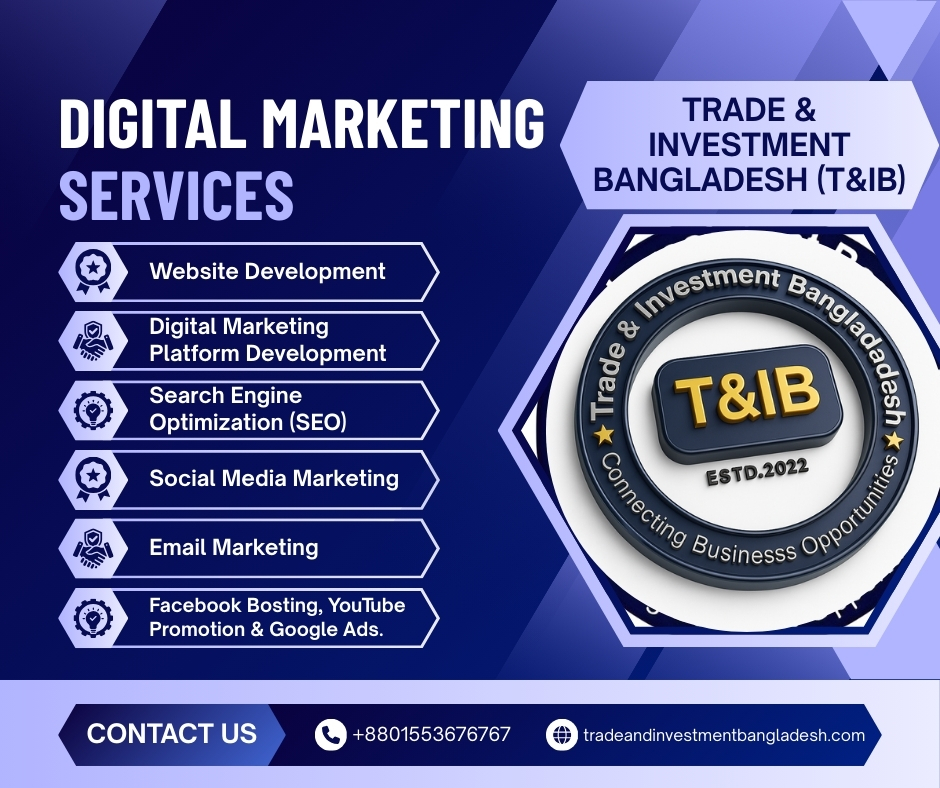
Role of Digital Marketing Consultants
The role of a digital marketing consultant is much broader than managing ads or preparing content calendars. At its best, digital marketing consultancy is a strategic business function. The consultant studies the company’s goals, target customers, service structure, competitive landscape, budget realities, and market opportunities, then translates that understanding into a digital roadmap.
The first major role is diagnosis. Many businesses know they need “digital marketing,” but they do not clearly know what is wrong. Some have a weak website, some have poor messaging, some attract the wrong audience, some lack content authority, and some spend money on campaigns without measuring outcomes. A consultant identifies the real constraints and prioritizes the most impactful solutions.
The second major role is strategy design. Not every business needs the same channels. A local retailer may need paid social media and location-driven search visibility. A consulting firm may need thought-leadership content and LinkedIn presence. An exporter may need SEO, digital catalog positioning, and lead-generation landing pages. A foreign company entering Bangladesh may need localized messaging and targeted outreach. A consultant selects the channel mix based on the business model, not on fashion.
The third role is audience targeting. Digital marketing only becomes efficient when it reaches the right people. Consultants define customer segments, buyer behavior patterns, and commercial intent. They help businesses speak to relevant audiences in the right tone, on the right platforms, and at the right stage of the decision journey.
Another important role is communication refinement. Many businesses are technically competent but fail to communicate their value clearly. Their websites are vague, their service descriptions are generic, and their online branding lacks coherence. A consultant improves clarity, positioning, persuasion, and professionalism. Often, this improvement in communication alone changes the quality of leads a business receives.
Consultants also play a coordination role. They connect management with execution teams. They help align designers, content writers, website developers, ad managers, and business owners around a common strategy. This is especially useful for SMEs and institutions that do not have a large internal marketing department.
Performance accountability is another core responsibility. A consultant tracks progress, reviews key metrics, studies audience response, and adjusts strategy over time. This turns digital marketing into a managed process rather than a series of disconnected actions. In a competitive environment where businesses increasingly expect measurable returns, this accountability is essential. The wider advertising market’s growth and the continued dominance of digital channels reinforce why data-driven optimization has become indispensable.
For international businesses, digital marketing consultants also serve as market interpreters. They help adapt communication for local cultural expectations, platform usage patterns, and buyer behaviors. This is especially valuable for businesses entering Bangladesh, where online trust-building, clear communication, and practical local relevance matter significantly.
In summary, the digital marketing consultant acts as strategist, analyst, advisor, coordinator, and optimizer. Businesses do not merely need more digital activity. They need the right digital activity, aligned with commercial objectives and refined through measurable performance.
Md. Joynal Abdin as a Business Consultant and Digital Marketing Expert
Md. Joynal Abdin represents a particularly relevant profile for businesses looking for a consultant who understands digital marketing in direct connection with business growth. His public profile identifies him as Founder and CEO of Trade & Investment Bangladesh, while his own website and service pages present him as a business consultant focused on entrepreneurship, market access, business development, and digital strategy. These public descriptions suggest a consulting approach that connects marketing visibility with broader business advisory work.
This combination matters. Many digital practitioners are strong in platform use but limited in business interpretation. By contrast, a consultant with business advisory grounding can look beyond clicks and impressions to ask more important questions. Is the business clearly positioned? Is the website aligned with the company’s actual market offering? Is digital communication supporting trade development, market entry, lead qualification, and institutional credibility? Are campaigns attracting commercially relevant audiences? These are the kinds of questions that connect digital marketing with real growth.
Md. Joynal Abdin’s public professional material also links him to areas such as consulting, export readiness, market entry, and business development. That wider orientation is valuable for SMEs, exporters, chambers, service firms, and foreign businesses seeking support in Bangladesh. Businesses in these categories usually need more than advertising support. They often require strategic communication, digital profiling, service positioning, search visibility, content development, and targeted market outreach.
His broader public profile also associates him with Trade & Investment Bangladesh and related leadership and editorial roles, including content connected to business directories and training. That is significant because digital marketing today depends heavily on authority-building content, digital discoverability, and structured business communication. A consultant who is active in these areas is often better placed to design digital strategies that serve not just promotion, but market trust.
For local businesses, such expertise can support website development, digital business profiling, social media planning, content strategy, search visibility, and lead-generation efforts. For foreign businesses, it can support localization, reputation-building, market-facing communication, and digital introduction to Bangladeshi audiences. For trade-support organizations and business institutions, it can support online authority, event promotion, membership communication, and strategic visibility.
In that sense, Md. Joynal Abdin’s profile as a business consultant and digital marketing expert is meaningful because it reflects integrated rather than isolated capability. His published business presence points to a model in which consulting, communication, trade support, and digital strategy reinforce one another. For clients, this can create a stronger foundation for sustainable business growth than a narrow platform-only marketing approach.
Closing Remarks
The rise of digital marketing consultancy is not a temporary trend. It is a structural response to how business now works. Customers search online before making contact. Buyers compare options digitally before entering negotiation. Partners evaluate credibility through websites, social profiles, and online references before responding. In this environment, the digital image of a business is not secondary to its commercial reality; it is part of that reality.
Digital marketing therefore should be understood as a growth discipline. It includes visibility, communication, trust-building, targeting, conversion, analytics, and optimization. The ten services discussed in this article show that business growth through digital channels depends on more than one tactic. SEO, paid search, social media, content, websites, email, reputation, video, analytics, and campaign integration each contribute to a wider performance system.
That is why businesses increasingly need digital marketing consultants. A capable consultant provides structure where there is confusion, focus where there is waste, clarity where there is weak communication, and accountability where there is uncontrolled spending. For local businesses, this can mean stronger domestic positioning. For foreign businesses, it can mean smoother market entry and more credible engagement. For exporters and institutions, it can mean wider visibility and better-quality relationships.
As internet use and social media participation continue to expand, and as global advertising investment keeps increasing, the case for strategic digital marketing grows even stronger. The evidence from current digital usage and ad-spend forecasts shows that the world is becoming more digital, more competitive, and more performance-oriented. Businesses that respond with professional, measurable, and integrated digital strategy will be better placed to succeed.
For businesses seeking a consultant who can combine commercial understanding with digital strategy, the most valuable partner is one who sees marketing not as isolated promotion, but as part of business development itself. In that regard, the profile of Md. Joynal Abdin as a business consultant and digital marketing expert offers a useful model: one that joins advisory insight, digital communication, market visibility, and practical growth orientation into a single professional framework.